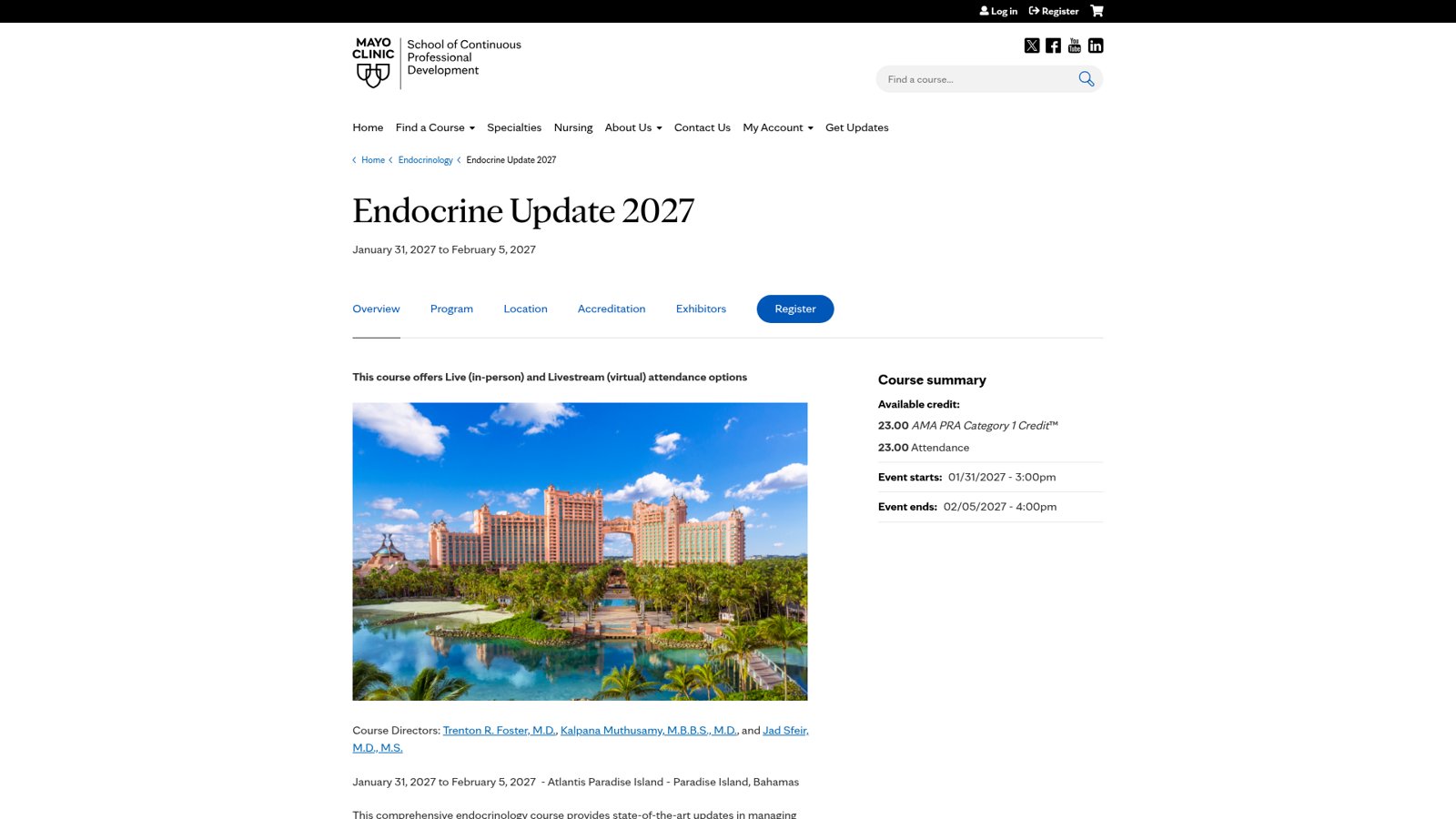
Endocrine Update 2027 is a comprehensive clinical education course organized by the Mayo Clinic School of Continuous Professional Development. Scheduled from January 31 to February 5, 2027, at Atlantis Paradise Island in Paradise Island, Bahamas, the program offers both live in-person and livestream virtual attendance options. Designed to meet the professional needs of practicing endocrinologists, endocrine surgeons, pharmacists, and internists caring for adult patients, the course delivers state-of-the-art updates in the diagnosis and management of complex endocrine disorders across the lifespan.
The curriculum addresses major advances in obesity treatment, including physiologic adaptation to weight loss, endoscopic bariatric therapies, bariatric surgical revisions, and novel anti-obesity pharmacotherapies targeting appetite regulation. Additional sessions explore emerging clinical evidence in thyroid disease, indeterminate thyroid nodule management, radiofrequency ablation, adrenal disorders such as mild autonomous cortisol secretion and congenital adrenal hyperplasia, pituitary tumors, acromegaly, arginine vasopressin deficiency, diabetes technologies, islet replacement therapies, osteoporosis, senolytics, and reproductive and menopausal endocrinology. Through didactic lectures, multidisciplinary tumor boards, clinical pathological conferences, and case-based discussions, attendees evaluate diagnostic imaging, surgical indications, and collaborative care pathways. Daily breakfast roundtables and concurrent small-group breakout sessions promote direct dialogue with faculty regarding controversies and evolving clinical practice guidelines.
Upon completion of the activity, participants should be able to evaluate current evidence-based guidelines and literature to manage common and complex endocrine conditions, integrate evolving technologies and risk stratification tools into individualized care, and compare the indications and risks of medical, procedural, and surgical interventions. Learners will also formulate longitudinal management plans spanning postpartum care and pediatric-to-adult care transitions, apply advanced diabetes strategies to optimize glycemic control, integrate evidence-based exercise and integrative approaches to osteoporosis management, coordinate multidisciplinary screening and surveillance for MEN1-associated neuroendocrine tumors, and design treatment plans for persistent or recurrent hyperparathyroidism.