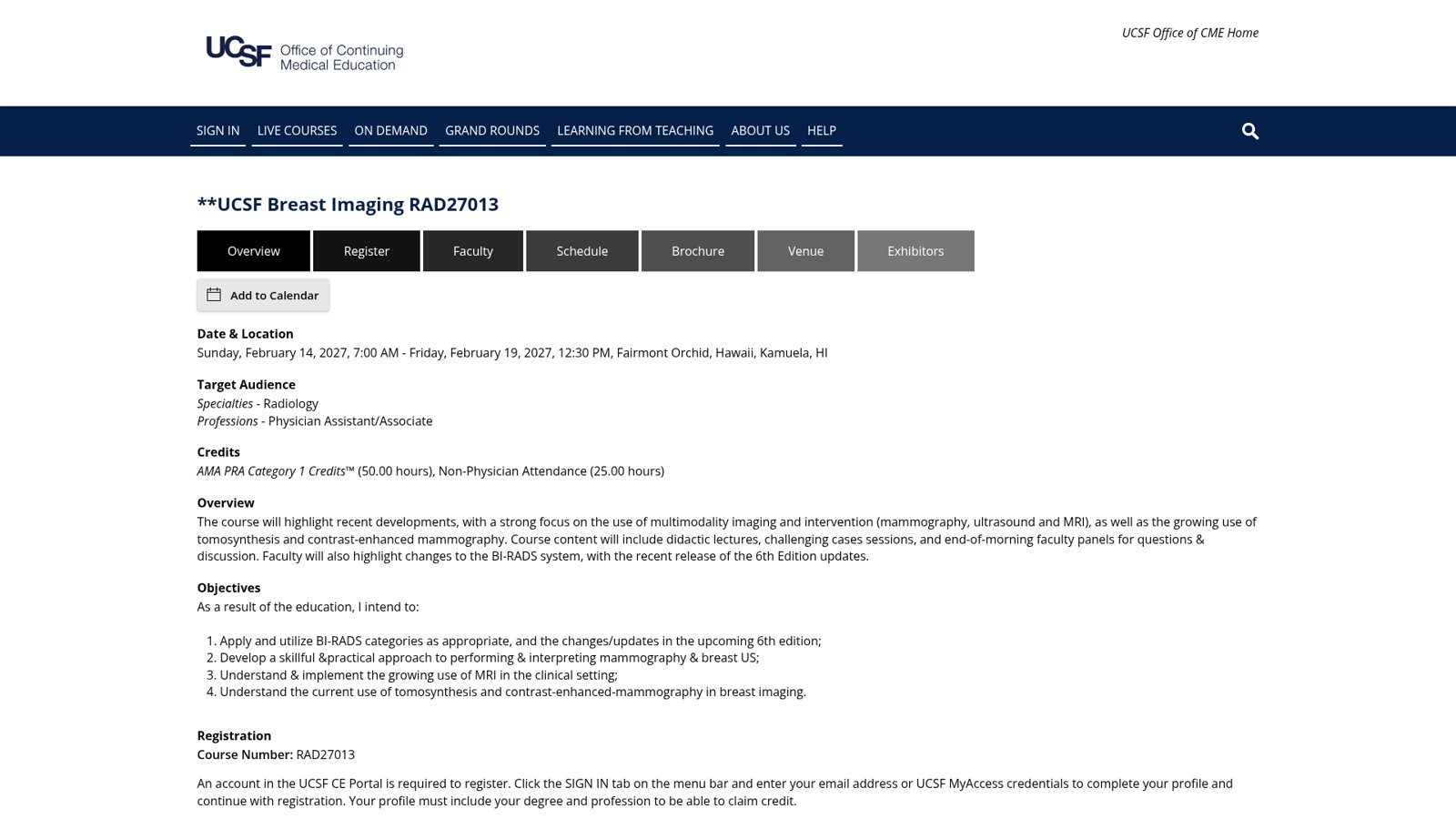
The UCSF Breast Imaging course (RAD27013) highlights recent clinical developments with a strong focus on multimodality imaging and intervention, including mammography, ultrasound, and magnetic resonance imaging (MRI). The curriculum also examines the growing clinical utilization of digital breast tomosynthesis and contrast-enhanced mammography (CEM). Throughout the program, expert faculty emphasize practical approaches and changes to the BI-RADS system associated with the release of the 6th Edition updates.
The instructional format integrates didactic lectures, challenging case sessions, parallel workshop discussions, and interactive end-of-morning faculty question-and-answer panels. Additionally, attendees can participate in early morning 'Brainstorming at Breakfast' sessions addressing practical workplace issues such as remote work, managing high clinical volume, and participant-submitted topics.
Key learning objectives prepare attendees to correctly apply and utilize BI-RADS categories and integrate 6th Edition updates into daily radiology practice; develop a skillful and practical approach to performing and interpreting screening and diagnostic mammography as well as breast ultrasound; understand and implement the expanding role of breast MRI in clinical pathways, including basic acquisition protocols, interpretation, biopsy techniques, abbreviated MRI, ultrafast, and diffusion-weighted imaging (DWI); and comprehend contemporary utilization patterns and biopsy guidance using tomosynthesis and contrast-enhanced mammography.
Specific clinical topics covered across the five-day schedule include axillary evaluation, supplemental screening in intermediate-risk women, evaluation of palpable breast lumps, symptoms of the nipple-areolar complex, assessment of unique patient populations (including male, transgender, and young patients), strategies to reduce recall rates, imaging evaluation of implants, injections, and autologous reconstruction, ultrasound-guided and stereotactic biopsy techniques, management of high-risk breast lesions, and staging extent of disease and therapeutic response in breast cancer patients.