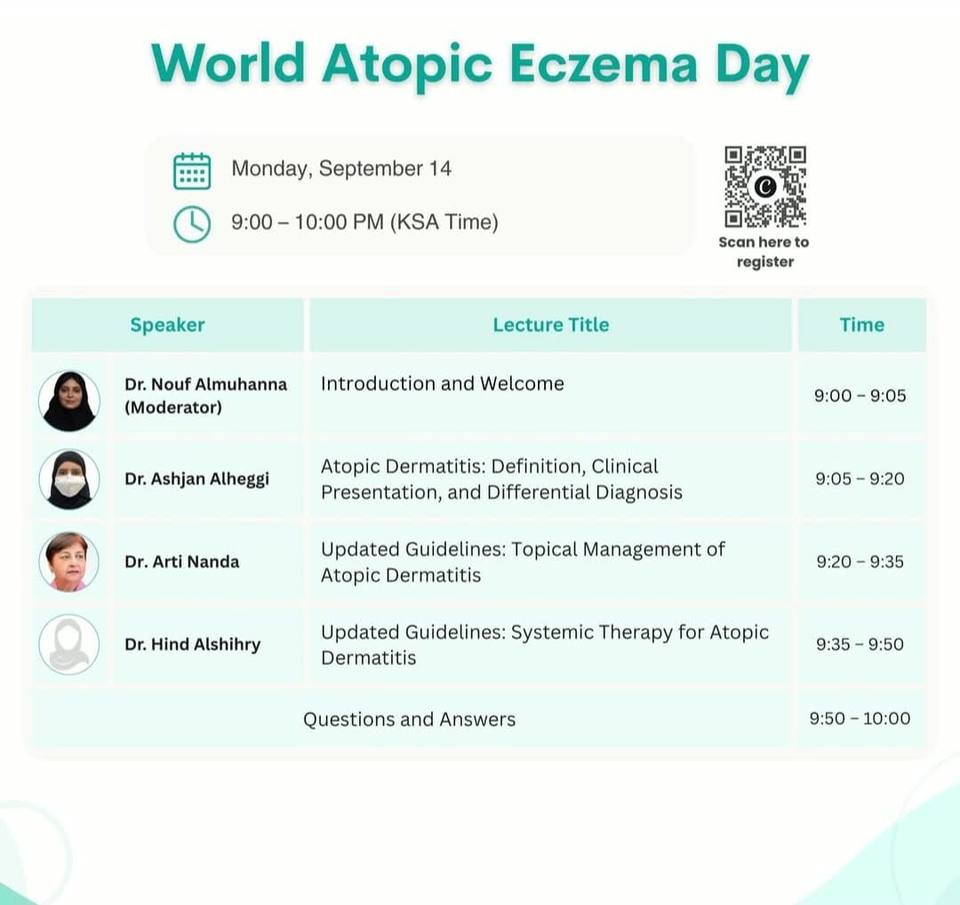
Marking World Atopic Eczema Day, this one-hour online scientific webinar takes place on Monday, 14 September 2026 from 9:00 to 10:00 PM (KSA time) and brings together regional dermatology faculty for a focused, guideline-driven update on atopic dermatitis.
Atopic dermatitis remains one of the most common chronic inflammatory skin diseases seen in dermatology and primary care, with a substantial burden on sleep, school and work performance, mental health and family quality of life. The therapeutic landscape has changed rapidly with the arrival of targeted biologics and oral small molecules alongside optimised topical care, and this session is designed to help clinicians translate the latest guidance into everyday practice.
Programme
- 9:00 - 9:05 PM: Introduction and welcome - Dr. Nouf Almuhanna (moderator)
- 9:05 - 9:20 PM: Atopic dermatitis - definition, clinical presentation and differential diagnosis - Dr. Ashjan Alheggi
- 9:20 - 9:35 PM: Updated guidelines - topical management of atopic dermatitis - Dr. Arti Nanda
- 9:35 - 9:50 PM: Updated guidelines - systemic therapy for atopic dermatitis - Dr. Hind Alshihry
- 9:50 - 10:00 PM: Questions and answers
What you will learn
The opening lecture reviews how atopic dermatitis is defined and recognised across age groups, the morphological patterns that vary between infants, children and adults, and the conditions most often confused with it, including seborrhoeic and contact dermatitis, psoriasis, scabies and cutaneous lymphoma. Accurate recognition remains the foundation of good outcomes and avoids prolonged, ineffective therapy.
The second lecture covers current guideline recommendations for topical management: the role of emollients and barrier repair, appropriate potency selection and duration for topical corticosteroids, the place of topical calcineurin inhibitors and newer non-steroidal topicals, proactive maintenance regimens, and practical guidance on wet wrap therapy, adherence and steroid phobia counselling.
The third lecture addresses systemic therapy for moderate-to-severe disease, including when to step up from topical treatment, the evidence base for biologic and oral targeted agents, expected onset of response, monitoring requirements, safety considerations and how to sequence therapy when a first-line systemic option fails.
The session closes with an interactive question-and-answer discussion where participants can raise challenging cases directly with the faculty.
Who should attend
Dermatologists and dermatology residents, paediatricians and paediatric allergy specialists, family medicine and primary care physicians, allergy and immunology clinicians, pharmacists and specialist nurses caring for patients with eczema will all benefit from this concise, practice-oriented update.
Registration is free and completed online via the official registration link.