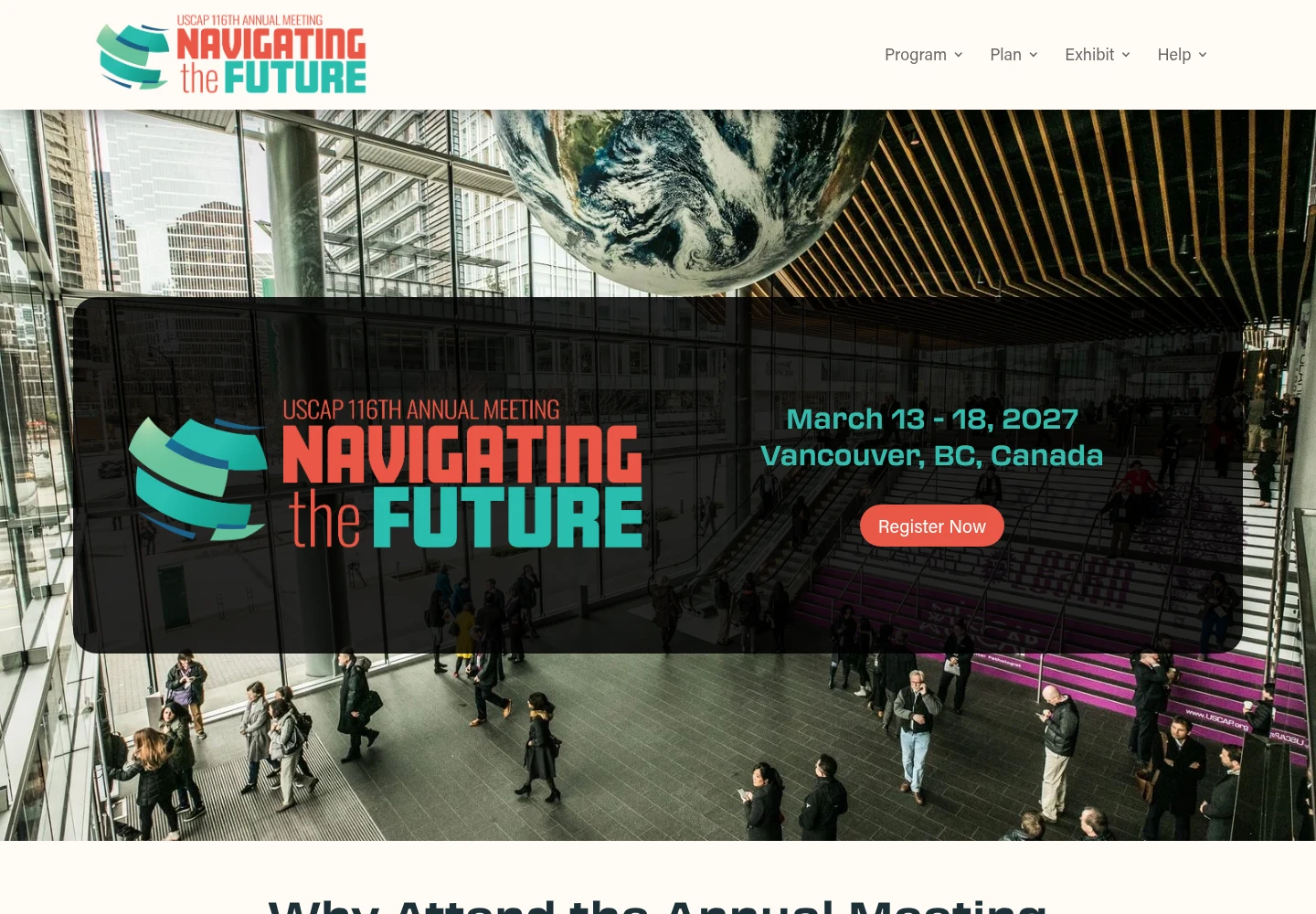
The USCAP Annual Meeting 2027 takes place in Vancouver, British Columbia, Canada, from March 13 to 18. Organised by the United States and Canadian Academy of Pathology, the meeting combines pathology education, research presentations and opportunities to connect with colleagues across subspecialties, institutions and career stages. The programme is designed to help pathologists examine challenging cases and take practical insights back to their own work. Education is organised through a broad selection of course and session formats. These include the Long Course, Histology Bootcamp, Luminaries in Pathology, A Day in the Sign Out and presentations from the USCAP journals. The published schedule also includes interactive microscopy sessions, offering focused attention to diagnostic problems in individual areas of pathology. Examples include diagnostic pitfalls in breast pathology, mesenchymal tumours of the gastrointestinal tract, head and neck squamous cell carcinoma, and endometrial precancers. Two featured lectures anchor the programme. On Saturday, March 13, Lynette M. Sholl, MD, presents the Maude Abbott Lecture, “The Big Business of Modern Medicine and the Role for the Academic Pathologist,” from 5:00 to 5:50 p.m. On Tuesday, March 16, Anant Madabhushi, PhD, delivers the Nathan Kaufman Timely Topics presentation, “Lessons Learnt from Computational Pathology: A 25 Year Journey,” in the same advertised time slot. Both are listed for the VCC Level 1 Ballroom. Research is represented through posters, platform presentations and moderated sessions. These formats allow attendees to hear from the investigators behind the work and discuss developments that may influence pathology practice. The programme also includes opportunities directed towards pathologists in training, including a genomic medicine workshop and a trainee mixer. The Exhibit Hall complements the scientific programme with technologies, products and resources relevant to laboratories and pathology practice. Attendees can meet industry representatives, explore available tools and consider emerging solutions while reconnecting with established colleagues and meeting new collaborators. Some individual programme activities are separately ticketed, so attendees should distinguish these selections from general meeting attendance when planning their schedules.