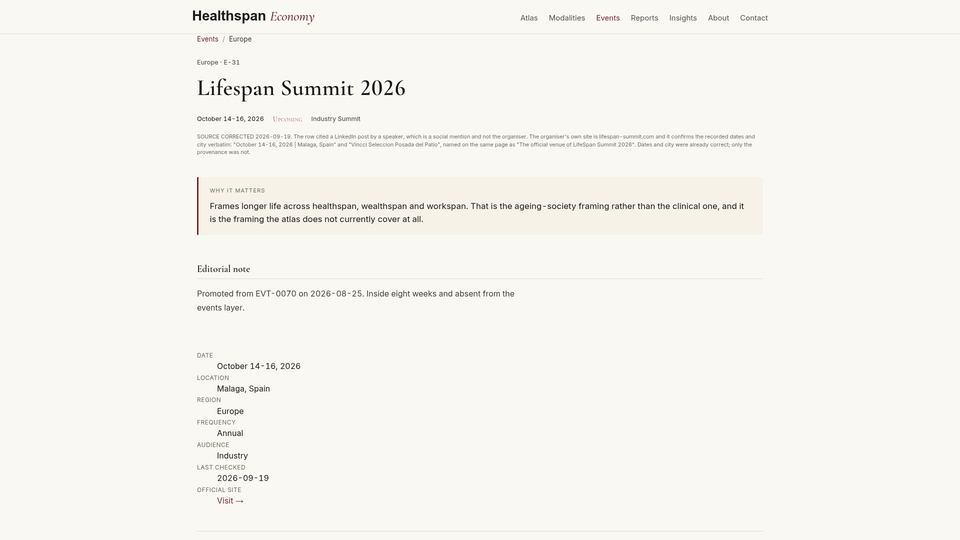
Lifespan Summit gathers in Malaga for three days at the Vincci Seleccion Posada del Patio with a framing that separates it from most longevity meetings: it treats longer life as a combined question of healthspan, wealthspan and workspan rather than a purely clinical one.
The healthspan strand covers the medical material — preventive medicine, metabolic health, diagnostics, biological-age measurement and the interventions with credible evidence behind them. The wealthspan strand addresses the financial consequences of living substantially longer, including retirement models, insurance, long-term care funding and the investment case for longevity businesses. The workspan strand looks at careers that now run decades longer than the systems around them assume, and at what employers, health systems and policymakers do about it.
That breadth makes the summit an industry meeting with a mixed audience: clinicians, founders, investors, insurers, employers and policy people. It is a useful counterweight to purely scientific gatherings, because most of the barriers to healthy-ageing programmes reaching patients are economic and organisational rather than biological.
For healthcare professionals in Saudi Arabia and the wider Gulf, the ageing-society framing is increasingly relevant. National health strategies across the region are shifting toward prevention and value, and the questions Lifespan Summit puts on stage — who pays for prevention, how employers participate, how long-term care is financed — are the same questions Gulf systems are beginning to answer.
Malaga in mid-October is an accessible European destination with direct connections from major Gulf hubs. The summit is annual and its audience skews toward industry and investors, so delegates seeking clinical protocol detail should read the agenda carefully before committing.
Registration, ticket tiers, the speaker roster and the final agenda are published on the organiser's site at lifespan-summit.com. Confirm dates and venue details there before booking travel.