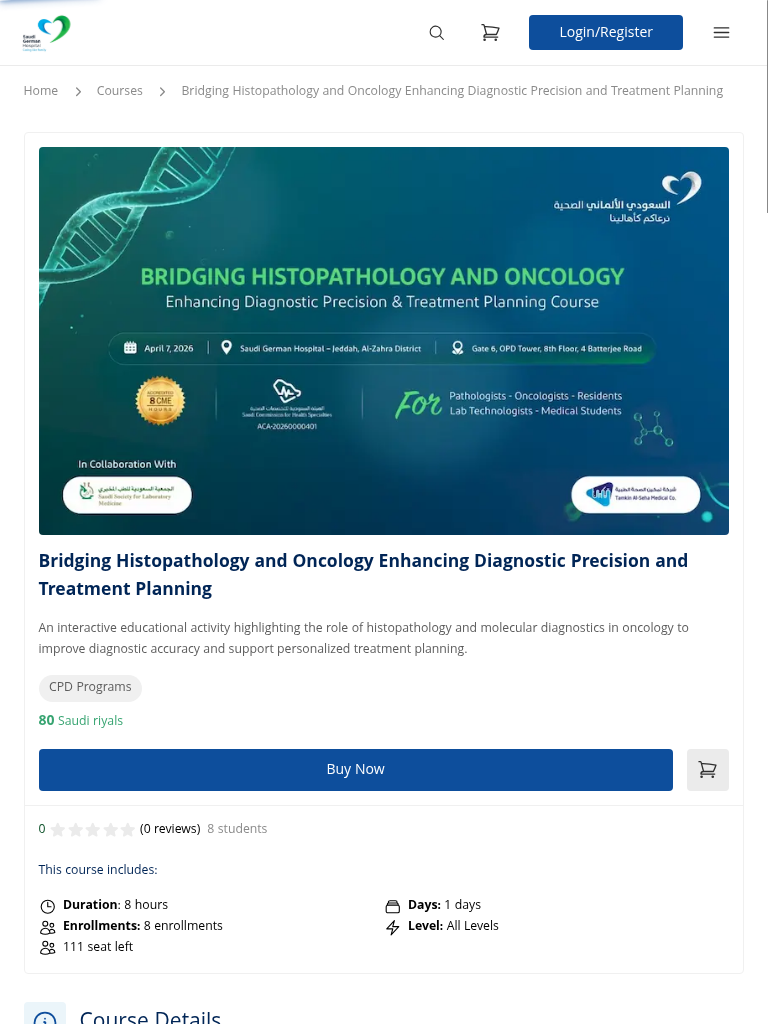
An interactive educational activity highlighting the role of histopathology and molecular diagnostics in oncology to improve diagnostic accuracy and support personalized treatment planning.
The program provides a comprehensive overview of histopathological principles, tumor grading, biopsy interpretation, and the clinical relevance of molecular markers in modern oncology practice. Through lectures, workshops, and interactive case discussions, participants will explore how pathology findings directly influence multidisciplinary decision-making across various cancer types, including breast cancer, lymphoma, and gastrointestinal malignancies.
The course also introduces participants to emerging advances in digital pathology and artificial intelligence, highlighting practical applications, benefits, and current limitations in routine oncologic practice. Designed for pathologists, oncologists, residents, lab technologists, and medical students, this activity aims to improve diagnostic consistency, promote effective collaboration between laboratory and clinical teams, and support the delivery of personalized, evidence-based cancer care.
Learning Objectives:
• Describe the clinical impact of histopathology and key molecular markers on personalized oncology treatment planning
• Apply standardized tumor grading and biopsy interpretation principles to clinical cases
• Demonstrate basic understanding of digital pathology and AI applications in oncologic practice
• Integrate pathology findings into multidisciplinary treatment planning